Torn between Sandy’s east bench and the west side? Both put you close to the mountains, but they offer very different daily rhythms, home styles and price points. If you want a simple way to weigh canyon access against freeway convenience, and views against lot size and budget, you are in the right place. Below, you will find clear tradeoffs, typical pricing, and a short checklist to help you decide. Let’s dive in.
East bench vs west side at a glance
- Setting and access: The east bench sits on the Wasatch foothills with higher elevation and uphill lots, while the west side rests on the flatter valley floor near I-15 and State Street. You will feel that difference in drives, winter conditions and views. For a quick primer on local geography, see the city overview on Sandy’s Wikipedia page.
- Lifestyle tradeoffs: East bench living leans into mountain views, steeper lots, and quick access toward Little Cottonwood Canyon. West side living favors faster freeway and TRAX access, more shopping nearby, and generally more value per square foot. You will notice those patterns in market snapshots on Redfin’s 84092 page.
- Price snapshot, Redfin medians, Feb 2026: 84092 (east bench) about $844,450; citywide Sandy median about $635,000; 84070 (historic/valley) about $479,000; 84094 about $534,000. Treat these as directional signals, since price varies by lot, view and updates.
Outdoor access and everyday routines
If you plan to ski or hike often, east bench addresses cut minutes off your drive to the mouth of Little Cottonwood Canyon and the Snowbird and Alta corridor. That proximity is a big lifestyle draw for many buyers. Learn more about the canyon’s location and recreation from the Little Cottonwood Canyon overview.
You will also find Dimple Dell Regional Park threading through southern Sandy, offering multi-use trails for hiking, biking and equestrian use. East bench pockets next to trailheads enjoy the easiest foot and bike access. Preview the park’s scope and trails via the Dimple Dell Regional Park guide.
Expect small microclimate shifts on the bench. Higher, wind-exposed lots can be a few degrees cooler, and steep driveways may hold snow longer than valley-floor streets. Plan for winter traction, snow removal and drainage checks as part of your tour.
Housing and lots you will see
East bench patterns
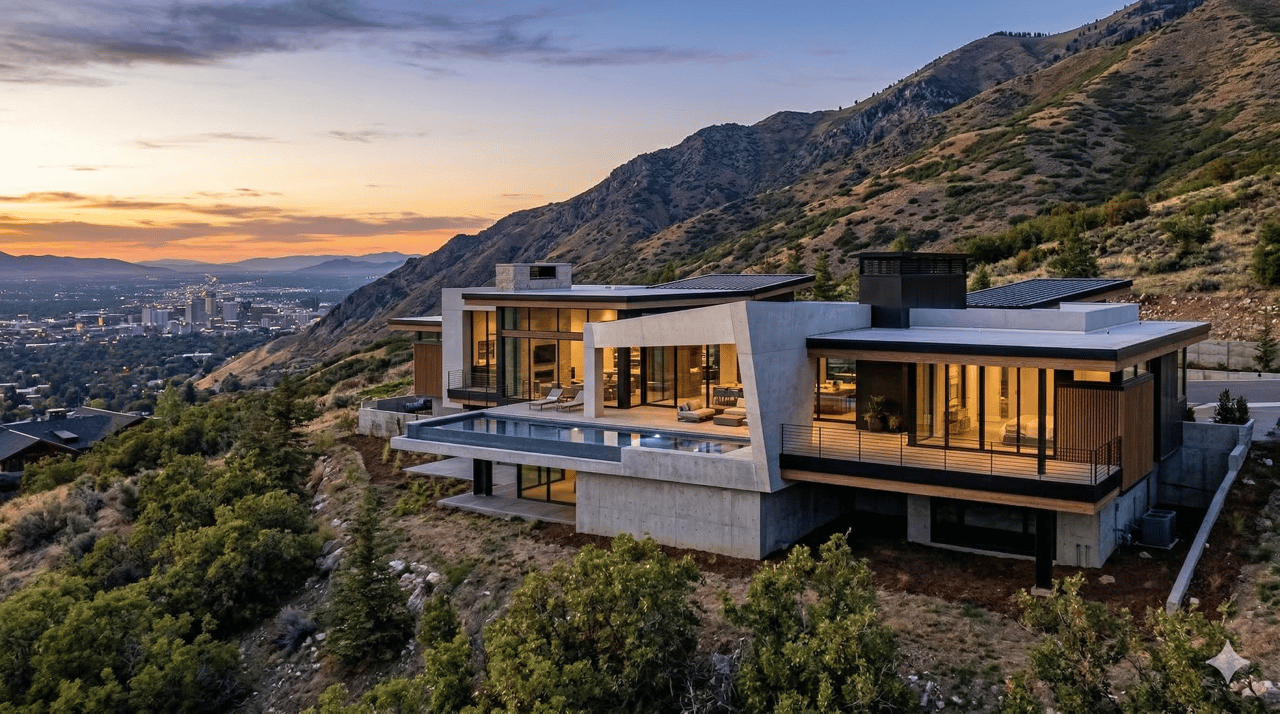
On the bench, lots are often sloped or terraced with noticeable grade changes. Walkout basements are common, and many floor plans orient around mountain or valley views. You will also see a mix of older custom ranch homes alongside newer remodels and executive rebuilds, with some gated or country-club-adjacent enclaves appearing in the 84092 market. You can scan examples on Redfin’s 84092 market page.
West side patterns
On the valley floor, expect flatter lots, more conventional street grids and subdivisions that place homes closer together. You will find a range of eras from historic Sandy near 9000 S to broad 1960s-to-1990s neighborhoods, plus more townhome and attached options near major corridors. For a feel of typical product, browse Redfin’s 84070 area snapshots.
Commute and transit access
I-15 runs along Sandy’s western edge, with key ramps at 9000 South and 11400 South. If you want the shortest freeway time, west side and central addresses usually make that easiest. Recent corridor work has targeted 9000 South for widening and repaving, which matters for your east-west drive times. See project context from UDOT’s 9000 South update.
Four TRAX Blue Line stations serve Sandy: Historic Sandy, Sandy Expo, Sandy Civic Center and Crescent View. These stations cluster closer to the valley floor, which generally favors west side convenience for rail riders. Station locations are listed on UTA’s station addresses page.
Sandy’s city-center plan, often called The Cairns, is bringing more mixed-use and transit-oriented development to the 9000–11400 S core near TRAX. That shift concentrates civic venues and shopping closer to central and west-side access. You can read background on the city’s layout and growth on Sandy’s Wikipedia entry.
In winter, seasonal canyon transit and park-and-ride options help skiers reach the Cottonwood Canyons. East bench residents often use these services or make short drives to trailheads. Program details change by season, so check current options on the Cottonwood canyons transit page.
Shopping and amenities
The largest retail and entertainment cluster sits around State Street and I-15, anchored by the Shops at South Town and nearby venues. That central hub, along with the Exposition Center, is easiest to reach from west side and central neighborhoods. For context, scan the mall’s footprint on The Shops at South Town page.
On the east bench, you will rely more on neighborhood grocers and quick downhill trips to State Street or 1300 East for larger errands. Private amenities and upscale dining in the foothills add another layer of appeal, which helps explain the price premium many bench homes command.
Prices and what they mean
Redfin medians, Feb 2026, show a clear split: 84092 at about $844,450 compared with 84070 at about $479,000, with the citywide median around $635,000 and 84094 near $534,000. That puts the east bench roughly 76 percent higher than 84070 by median, a signal of the view, lot and customization premium. Your actual price will depend on the specific view corridor, lot size, renovation level and distance to trails or canyon entrances.
When budgeting, think in terms of tradeoffs. East bench listings tend to price in views and unique sites, while west side homes often deliver a lower cost per square foot and easier daily logistics. Always pair a median with its date and look at recent comps near your target street.
Which side fits you
Choose the east bench if
- You want mountain views and the shortest drives toward Little Cottonwood Canyon.
- You prefer larger or custom lots, and you are comfortable with steeper driveways and winter upkeep.
- You value walkout basements, multi-level floor plans and a foothill setting.
Choose the west side if
- You want minimal freeway time and quick access to TRAX, shops and civic venues.
- You prefer flatter lots, easier snow removal and more townhome or attached options.
- You are aiming for more square footage value within a set budget.
Tour-time checklist
- East bench checks: driveway grade and winter traction, retaining wall condition and drainage, sun exposure for snow melt, access during heavy storms, and whether the view is seasonal or permanent.
- West side checks: rush-hour drive to your workplace or TRAX station, proximity to I-15 ramps and any related noise, and quick access to retail or medical corridors on State Street and 9000 S.
- Both sides: lot orientation and shade, HOA or city responsibilities for snow removal on steep streets, and any private covenants or easements that affect use.
Ready to compare homes on the ground?
If you are weighing these tradeoffs, a street-by-street tour will make the choice clear fast. I will help you map commute tests, trailhead access, and pricing by micro-area so you can choose with confidence. For a local, low-stress plan to buy or sell in Sandy, reach out to Nick Booth Real Estate today.
FAQs
What defines Sandy’s east bench versus the west side?
- The east bench sits on the Wasatch foothills with higher, sloped lots and closer access toward canyon trailheads, while the west side lies on the flatter valley floor nearer I-15 and State Street, as outlined on Sandy’s Wikipedia page.
How do commute and transit options differ in Sandy?
- West side and central addresses are typically closer to I-15 and TRAX Blue Line stations, which can reduce daily commute times. Station locations are listed on UTA’s station addresses page.
Are east bench homes in Sandy more expensive?
- Redfin medians, Feb 2026, show 84092 at about $844,450 versus 84070 at about $479,000, signaling a sizable bench premium that reflects views, lot size and custom features.
Where are Sandy’s main shopping hubs?
- The largest retail cluster is around State Street near I-15, anchored by the Shops at South Town and nearby venues, which are easier to reach from west side and central neighborhoods, per The Shops at South Town overview.
Is there winter transit to the Cottonwood Canyons?
- Yes, seasonal services and park-and-ride options operate toward the Cottonwood Canyons; check current details on the Cottonwood canyons transit page.