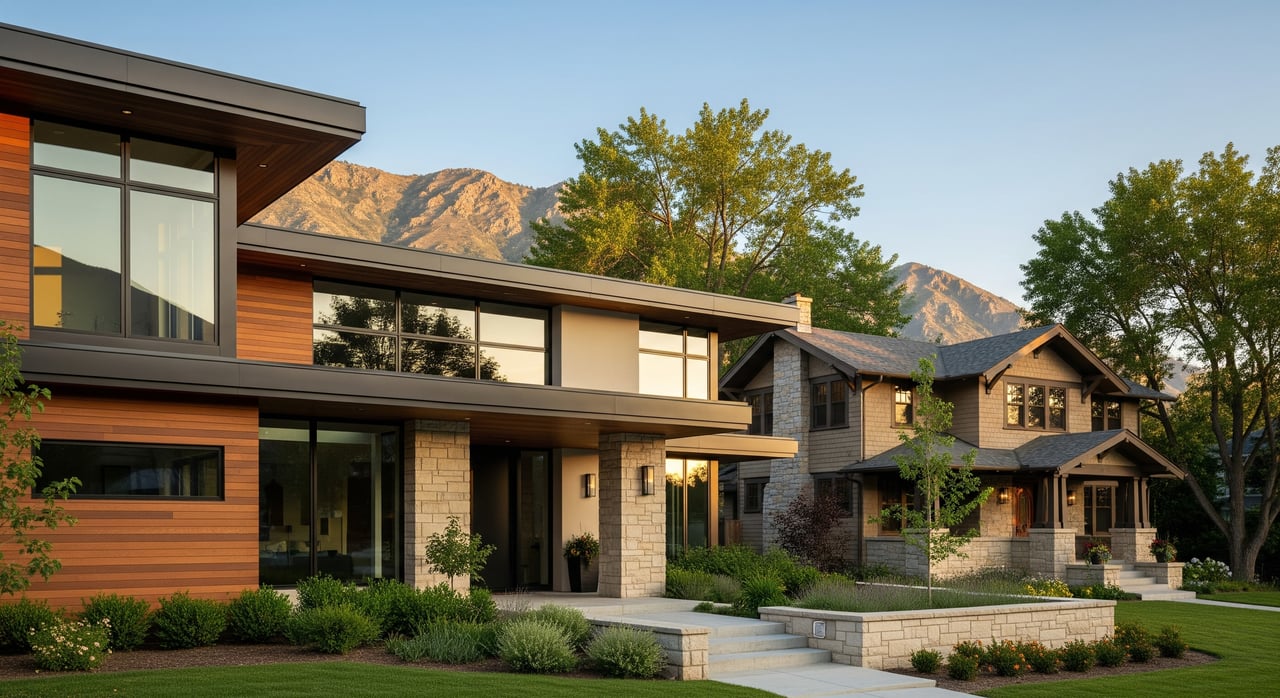
Torn between a brand-new build and a lived-in home in Draper? You are not alone. With active construction and established neighborhoods across the south Salt Lake Valley, both paths can make sense depending on your budget, timing, and appetite for projects. In this guide, you will compare true costs, timelines, inspections, incentives, and negotiation angles so you can move forward with confidence. Let’s dive in.
Draper market snapshot
Draper sits in southern Salt Lake County with quick access to mountain trails, the Draper/Lehi employment corridor, and the TRAX Red Line terminus. You will find both fresh subdivisions and a healthy mix of resale homes across established streets and hillside communities. Local market conditions can shift your leverage, so it helps to track current Salt Lake County data before you write offers.
Definitions you will see:
- New construction: Spec or inventory homes that are move-in ready or near completion, tract homes you customize from a plan, and full custom builds.
- Resale: A previously owned home, sometimes with recent updates.
Total cost of ownership
Upfront purchase costs
- Purchase price: New homes often carry a premium for new systems, modern design, and warranties. Resale homes can price lower per square foot but may need updates.
- Upgrades and customization on new builds: Base prices cover standard finishes. Expect additional costs for selections like flooring, counters, lighting, and lot premiums. Typical ranges: minor upgrades about $5,000 to $20,000, mid-level $20,000 to $60,000, and high-end $60,000 or more.
- Renovations on resales: Costs vary widely. As a reference, kitchen remodels can run about $20,000 to $80,000 or more, HVAC replacement about $5,000 to $12,000, and roof replacement about $7,000 to $20,000.
- Closing costs: Builder contracts sometimes include unique fees or prepaid HOA items. Resales follow standard practices, and you can often negotiate seller concessions.
Ongoing annual costs
- Property taxes: Draper parcels are assessed by Salt Lake County. New construction assessments change as improvements are recorded. Review parcel-specific estimates with the county.
- HOA fees: Many new subdivisions and townhome communities have HOAs. Fees vary from modest to several hundred dollars per month based on amenities. Resale homes in HOA communities assume existing dues.
- Utilities and energy: Newer homes typically offer better insulation, windows, and mechanicals, which can reduce utility costs early on. Energy-efficient options like higher-efficiency HVAC, heat pumps, EV charging prep, or solar-ready roofs may increase upfront cost but can lower long-term bills.
- Insurance: Newer systems can mean lower premiums, but replacement cost and local risk factors still drive pricing. Get Draper-specific quotes from local insurers.
- Maintenance and repairs: Plan a maintenance budget. For resales, many owners set aside about 1 to 3 percent of home value per year, adjusted for age and condition. New construction often has lower early-year maintenance, with warranty coverage for defined periods.
Warranties and repair coverage
Builder warranties typically include:
- About 1 year for workmanship and defects.
- About 2 years for major systems like plumbing, electrical, and HVAC.
- Structural coverage often up to 10 years for major defects, sometimes through a third-party provider.
Resale buyers can add a one-year home warranty as a separate purchase. Some sellers will pay for this as a negotiation item.
Incentives and rebates
Builders in Draper may offer incentives that change your effective cost. Common options include mortgage rate buydowns, paid closing costs, and credits for upgrades. Preferred lenders may waive certain fees or lock rates for a set period. On the efficiency side, you can explore utility rebates and state or federal energy tax credits for qualifying equipment and improvements. Always compare incentives to independent lender offers and consult a tax professional about credit eligibility.
Timelines and contracts
How long it takes to close
- Resale homes: Most conventional closings take about 30 to 45 days after acceptance, with inspection and appraisal typically in the first 10 to 17 days.
- New spec or inventory homes: If move-in ready, closings often run 30 to 60 days.
- Build-from-plan: Many Draper-area builds finish in about 4 to 9 months, depending on permits, weather, and complexity. Custom builds can take 9 to 18 months.
If you need to sell a current home to buy, your timeline can affect your negotiation strategy on both new and resale properties.
Contract differences to expect
- Builder contracts: These are usually builder-prepared and outline deposits, option selections, change orders, delivery dates with allowed delays, warranty language, and punch-list timelines. They can include escalation clauses, nonrefundable deposits after certain milestones, and specific default or cancellation penalties.
- Resale contracts: Standard local forms include inspection, appraisal, financing, and title/HOA review contingencies. Language is often more flexible for buyers to cancel after inspections if needed.
Financing and appraisals
- Standard mortgages: Work for both resales and move-in-ready new homes.
- Construction financing: Construction-to-permanent loans fund the build then convert to a standard mortgage. Lot loans or construction-only loans are common on custom projects. Not all lenders offer these products.
- Appraisals: New builds may rely on comparable sales of other new homes. In a fast-moving market, appraisals can lag and create appraisal gaps. Resale appraisals rely more on nearby recent sales.
- FHA/VA: Both allow new construction, but you may see extra builder or appraisal requirements. Some VA programs require builder approval.
- Rate buydowns: Builders frequently use temporary buydowns like a 2/1 to lower initial payments. Understand how long the buydown lasts and your payment after it ends.
Inspections and due diligence
Resale inspections
Resale purchases in Draper should include a full home inspection that covers the roof, foundation, structure, HVAC, plumbing, and electrical systems. You can add specialist checks such as sewer scope, radon, mold, pest, chimney, or pool as needed. Inspection results often lead to repair requests or credits.
New construction inspections
Builders perform internal checks and Draper officials complete code inspections. Still, it is smart to hire your own inspector at key stages:
- Pre-pour or foundation review.
- Pre-drywall inspection to assess framing, wiring, plumbing, and ducting.
- Final inspection and punch list before closing.
- An 11-month walkthrough to document warranty items.
Your inspection access depends on contract terms, so confirm the schedule and ground rules in writing.
Warranty fine print to confirm
- Coverage length by category: workmanship, systems, and structure.
- Exclusions: soil movement, normal settlement, improper maintenance, and more.
- Claim process: how to submit, expected response times, and dispute steps.
- Transferability: whether future buyers can assume coverage, and any fees to transfer.
Common risks and red flags
- New construction: Unclear change-order rules, surprise assessments, lot-specific issues like drainage or steep slopes, and longer custom-build timelines that add risk. Verify builder licensing and ask for references.
- Resale: Deferred maintenance, moisture or pest concerns, older mechanicals near end-of-life, and potential foundation issues in older hillside homes.
Negotiation strategies in Draper
New construction playbook
- Focus on what matters most to you. If your priority is monthly payment, a builder-paid rate buydown could beat a small price cut. If you care about finishes, target upgrade credits or lot premiums.
- Timing can help. Builders often sweeten incentives at the end of a phase, on standing inventory, or when they can close quickly with a well-qualified buyer.
- Keep alternatives in hand. A strong pre-approval and the ability to close on a spec home can increase your leverage.
Resale playbook
- Price and credits are more flexible. Use recent comparable sales and days on market to justify your offer.
- Let inspections work for you. Ask for repairs or credits tied to specific findings.
- Be realistic in hot segments. Multiple-offer situations favor sellers, so a clean, well-structured offer can stand out.
Which option fits you?
Choose new construction if you want:
- Lower early maintenance with defined warranties.
- The ability to customize finishes and layout within a builder’s options.
- A later move-in date that aligns with your timeline.
Choose resale if you want:
- More neighborhood choices and established landscaping.
- Potential price savings with room to negotiate.
- Faster closing and the ability to improve over time.
Many Draper buyers land in the middle, comparing a move-in-ready spec home against a lightly updated resale at a similar price point. In that case, weigh the value of warranties and energy efficiency against any renovation you plan to complete in the first few years.
Local checklist for Draper buyers
Questions for builders
- What exactly is included in the base price, and which items are upgrades?
- What incentives are available today, and how do they compare to a small price reduction?
- What is the expected build timeline and allowed delays, and what remedies exist if milestones slip?
- Can I schedule pre-drywall and final inspections with my own inspector?
- What are the HOA fees and CC&Rs, and are there any community assessments?
- What are the warranty terms, who administers them, and is coverage transferable?
Questions for resale sellers
- How long has the home been on the market, and what are the most relevant recent comparable sales?
- What do seller disclosures say about known defects, remodel permits, or past insurance claims?
- How old are the roof, HVAC, water heater, and major appliances, and what is their service history?
- Are there HOA dues or pending assessments, and can I review the documents?
Smart next steps
- Get pre-approved so you can compare builder-lender incentives to outside offers.
- Price scenarios with and without a buydown to see your breakeven point.
- If building, map out selection budgets early so upgrades do not surprise you later.
- If buying resale, budget for near-term repairs and prioritize an inspection plan.
- Verify parcel-level taxes with Salt Lake County and ask Draper’s Building Division about permits and inspection schedules for your address.
Ready to compare your top options? Reach out to schedule a strategy session, tour new communities, and line up the best resale matches for your goals. You will get clear, local guidance from offer to closing.
FAQs
What costs differ most between new construction and resale in Draper?
- New builds often cost more upfront due to base price and upgrades, while resales can be cheaper to purchase but may require renovation and higher early maintenance.
How do HOA fees affect my Draper budget on a new build?
- Many new communities include HOAs with dues that vary by amenity level; add monthly HOA costs to your mortgage, tax, insurance, and utilities when calculating affordability.
Can I hire my own inspector for a Draper new construction home?
- Yes, many buyers schedule pre-drywall and final inspections, but your contract controls access and timing, so confirm inspection rights in writing before you sign.
How long will a build-from-plan take in Draper compared to resale?
- Resales commonly close in 30 to 45 days, while build-from-plan timelines often run 4 to 9 months, with custom homes taking 9 to 18 months depending on complexity and permits.
What builder incentives should I prioritize in today’s market?
- Choose incentives that match your goals, such as a temporary rate buydown for lower payments, closing cost credits to reduce cash due, or upgrades that would be costly to add later.
How do Utah energy rebates and credits factor into my decision?
- Efficiency upgrades can reduce ongoing utility costs, and you may qualify for utility rebates or federal credits; confirm current programs and eligibility with professionals before you buy.