If you searched "homes for sale in Murray, Utah" this month, you saw one number. As of August 2026, the citywide median list price sits around $548,000, while the median sale price over the three months ending May 2026 landed closer to $525,000. That number gets repeated on every portal, every market snapshot, every quick comparison chart.
What it does not tell you is that Murray is not one housing market wearing that price tag. It is two.
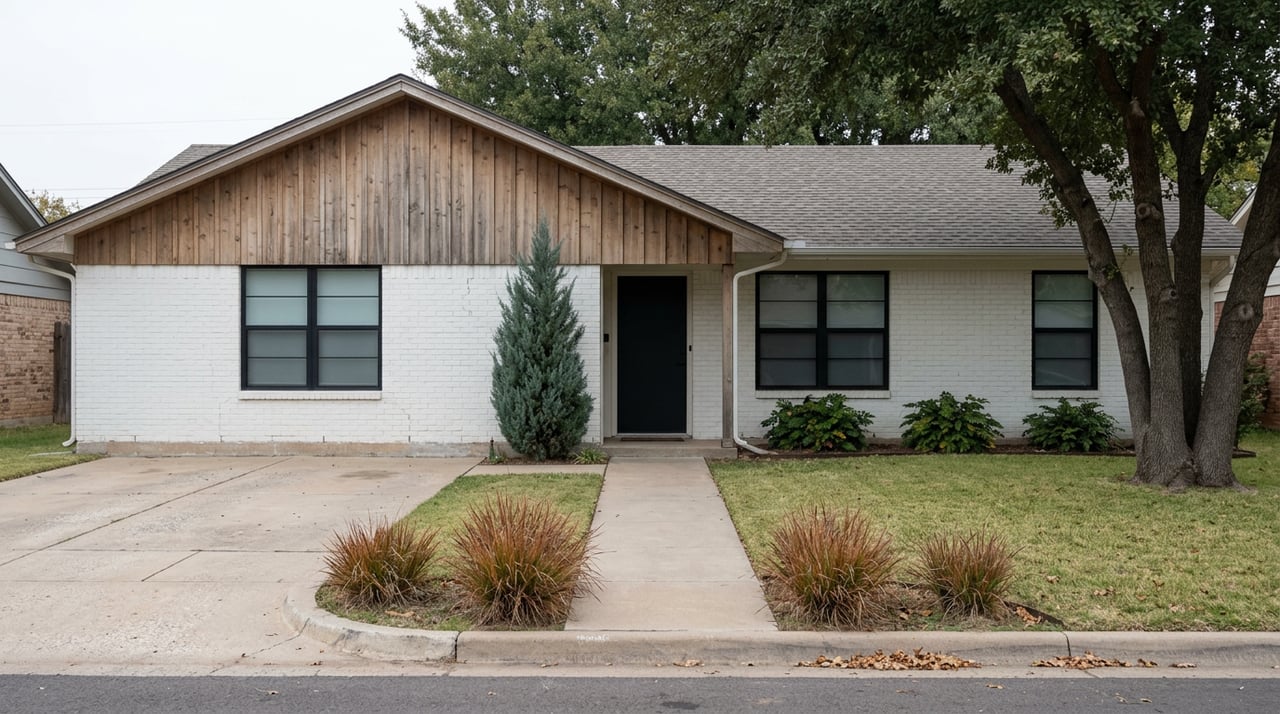
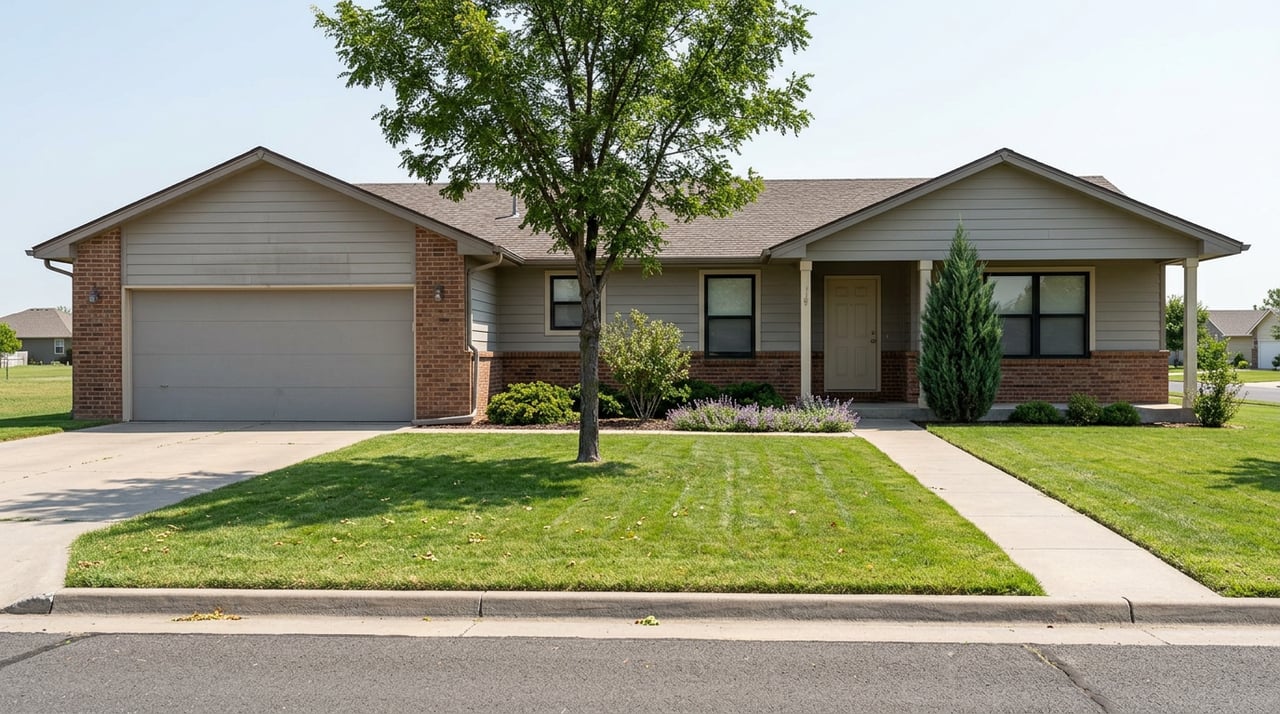
One market is the Murray most people picture: mid-century ramblers on tree-lined streets near Murray Park, larger lots, established landscaping, a rhythm that has not changed much in decades. The other market did not exist twenty years ago and is still being built out today, block by block, next to a light rail platform. Blend those two products into a single median and you get a number that is technically accurate and practically useless for anyone trying to figure out what their money actually buys.
The Legacy City: Murray Park, Vine Street, and the Streets That Built the Median
Drive the older sections of Murray, the streets radiating out from Murray Park and Vine Street toward the Murray Theater, and you're in single-story mid-century homes on lots that feel generous by today's standards. Farther east, toward the Cottonwood Heights border, lots get larger and some homes pick up east-bench views. Closer to State Street, infill construction has filled gaps with townhomes and modern single-family product at a mix of price points.
This is where most of Murray's housing stock still sits, and it's where the price bands roughly split into three tiers: entry-level condos and starter homes in the $300,000s to $400,000s, established mid-century single-family homes in the $500,000s to $650,000s, and newer construction pushing past $800,000. Fashion Place Mall and the surrounding retail corridor anchor the shopping side of daily life here, and Intermountain Medical Center, a 468-bed flagship campus spanning 110 acres, sits close enough to draw steady demand from hospital staff and the broader healthcare workforce it employs.
None of this is new. It's the Murray that's been building equity for fifty years.
Then the City Built a Second Murray, Next to the Tracks
About fifteen years ago, Murray City redirected a 97-acre stretch of former industrial land between 4800 South, State Street, and the TRAX and FrontRunner rail lines into what the city's own planning documents call the Murray City Center District, better known by the name of the street running through its middle: Fireclay.
The idea was straightforward. Put dense, walkable housing and retail directly against a transit stop and let people live car-free if they want to. Hamlet Homes broke ground first, with live/work townhomes at Birkhill at Fireclay that opened at pre-construction prices starting in the low $180s, part of a planned 21-acre community meant to eventually hold more than 230 residential units alongside 150,000 square feet of office and retail space. The project won Utah's Governor's Quality Growth Award in 2009 for the concept.
Today, resale prices inside that same Birkhill building span roughly $215,000 to $885,000, a range wide enough to include a starter condo and a much larger unit under one roof. That spread alone tells you something a single median never could: the Fireclay product itself is not one price point either. It's a small, self-contained market with its own internal range, built around proximity to the Murray North TRAX stop rather than lot size or neighborhood tenure.
Around Birkhill, the district kept filling in. Metro at Fireclay, a Greystar-managed apartment community, was leasing studios starting near $1,104 a month as of mid-2026, just steps from the platform, with amenities built for renters who want urban convenience without a car. On the affordable side, TWG Development brought two phases of Residences at Fireclay online, a $13 million, 40-unit building for seniors 62 and older earning 25 to 50 percent of area median income with a preference for military veterans, followed by an adjacent $11 million, 30-unit second phase. As of early August 2026, one-bedroom units there were listed around $988 to $1,055 a month, about 20 percent below Murray's average one-bedroom rent.
That's four distinct products, live/work townhomes, market-rate apartments, income-restricted senior housing, and resale condos, all within a few blocks of each other, all built in the last fifteen years, and all sitting inside the same "Murray" that shows up as one median on a portal search.
Two Markets, Side by Side
| Legacy Murray (Murray Park, Vine Street, State Street infill) | Fireclay District (TOD near Murray North TRAX) | |
|---|---|---|
| Typical product | Mid-century single-story homes, larger lots | Live/work townhomes, condos, apartments, income-restricted senior units |
| Typical price range | $300s-$400s entry condos, $500K-$650K established homes, $800K+ new construction | Condo resales spanning roughly $215K-$885K within a single building |
| What you're buying | Land, established trees, distance from transit corridors | Walkability to TRAX, newer construction, less land to maintain |
| Best fit for | Buyers who want a yard and an established neighborhood feel | Buyers who prioritize transit access and lower-maintenance living |
A $520,000 townhome one block from the Murray North TRAX platform and a $520,000 rambler with a quarter-acre lot near Murray Park are not the same purchase decision, even though they'd show up as the same dot on a price chart.
Why the Split Matters More Right Now Than It Did a Year Ago
Rate movement through the spring of 2026 pulled these two markets apart even further. By May 2026, the 30-year fixed rate for a typical Murray buyer had climbed to 6.75 percent, up from 6.50 percent thirty days earlier and 6.19 percent back in February, the low point of the prior seven months. On a median-priced home, that climb added roughly $146 a month in principal and interest compared to the February low.
That increase did not land evenly. Jumbo borrowers, the buyers financing Murray's over-$700,000 homes, many of them the larger, established properties near the Cottonwood Heights border, were facing rates near 7.25 percent, visibly slowing that segment. As of May 2026, roughly 18 percent of Murray closings involved a seller who had cut the price before going under contract, concentrated in the under-$400,000 and over-$700,000 bands. The $400,000 to $700,000 middle, where much of the Fireclay resale product and mid-century starter stock lives, kept moving fast, with a median time to contract of just four days that month.
Zoom out to the whole city and the citywide numbers show the strain: over the three months ending May 2026, Murray's median sale price was $525,000, down slightly from a year earlier, with the median price per square foot at $256, down 5.2 percent year over year. Homes were taking a median of 37 days to sell, up from 30 the prior year, and Murray recorded 130 closings in May 2026 compared to 155 the year before. By August 2026, the median list price had ticked up to $548,000, itself down about 2 percent from the month before.
Put those pieces together and the picture is not "Murray slowed down." It's that two different markets slowed down for two different reasons. The upper tier is running into jumbo rates. The lower tier is running into affordability. The middle, where Fireclay's smaller units and legacy starter homes both sit, is the one segment still moving in days rather than weeks.
Statewide, for comparison, Utah's median listing price stood at $582,450 as of June 2026, according to Federal Reserve data. Murray's blended median has stayed below that state figure, but the two Murrays inside it are pulling in opposite directions at different speeds, which is exactly what a single citywide number can't show you.
What This Means If You're Buying or Selling
If you're shopping in Murray right now, the first useful question isn't "what's the median price." It's "which Murray am I actually looking at." A townhome near the TRAX platform and a rambler near Murray Park compete for different buyers, carry different maintenance realities, and are moving through the current rate environment at different speeds. Comparing them on price per square foot alone will mislead you in both directions.
If you're selling, the same logic applies to pricing strategy. A legacy home in the $500,000s or $600,000s is competing against other established properties in a segment that's still moving quickly. A home above $700,000 is competing against a smaller, more rate-sensitive buyer pool right now, and pricing it to test the market instead of pricing it to the comps that are actually closing is the fastest way to end up as one of those May price cuts.
A Few Questions Worth Answering Directly
Is the Fireclay District part of Murray's historic downtown? It overlaps with it. The redevelopment area sits along State Street near several structures included on the National Historic Register, and the city's own design guidelines treat new construction there as an extension of, not a replacement for, that older core.
Can anyone rent the affordable units at Residences at Fireclay? No. Both phases are income-restricted, reserved for residents 62 and older earning 25 to 50 percent of area median income, with a stated preference for military veterans and set-aside units for disabled seniors and those who have experienced homelessness.
Will Murray keep building more of this kind of transit-oriented housing? The 97-acre district the city planned around the Fireclay corridor still has room for continued build-out beyond what's already open, and the city's design guidelines were written specifically to guide that kind of infill over time rather than for a single project.
Murray's median price will keep showing up as one line on every search result. Knowing which Murray you're actually comparing yourself against is the difference between a smart offer and a guess. If you want to talk through which segment fits what you're trying to do, whether that's a legacy home near Murray Park or something closer to the TRAX platform, Nick Booth is glad to walk through the comps with you. Let's Connect.