Why multigenerational living is growing in Utah
Multigenerational households -- defined as homes where two or more adult generations live together -- have been growing steadily across the country for the past decade, and Utah is no exception. Several factors are converging to drive this trend along the Wasatch Front.
Utah's strong family culture has always leaned toward maintaining close family proximity. But the financial calculus has sharpened the trend in recent years. Home prices that remain elevated relative to incomes, student debt loads among younger adults, and the cost of elder care and senior housing have all pushed more families toward shared living arrangements that would have seemed less necessary a generation ago.
At the same time, a growing portion of Utah's in-migration comes from cultures where multigenerational living is the default expectation rather than an adaptation to financial pressure. Buyers from California, from parts of Asia and the Pacific Islands, and from various immigrant communities are actively seeking homes designed for extended family living rather than the traditional nuclear family footprint.
What multigenerational buyers are actually looking for
The specific features that matter most to multigenerational buyers vary depending on how the household is structured, but several elements come up consistently.
A separate entrance is one of the most frequently requested features. The ability for an in-law suite, basement apartment, or secondary unit to be accessed without going through the main living area preserves privacy and autonomy for both generations. Homes with walkout basements that have their own exterior door are particularly well-suited to this, and Utah's topography -- hillside lots with exposed lower levels are common throughout the Draper, Cottonwood Heights, and east bench areas -- means this feature appears more often than it might in flatter markets.
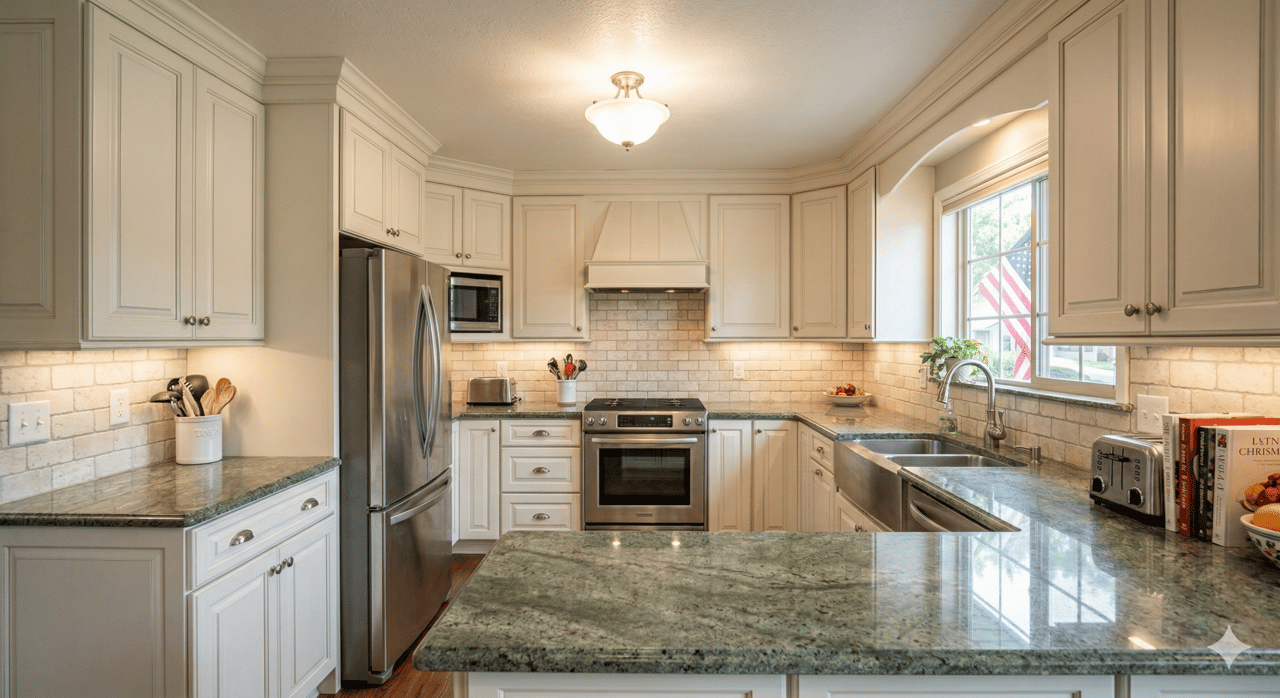
A full secondary kitchen, or at minimum a kitchenette with a sink, small refrigerator, and microwave, is often near the top of the list. A basement that is finished but shares the main home's kitchen requires significantly more coordination than a space with independent food preparation capability.
A separate laundry setup -- even a single stackable unit -- adds meaningfully to the functionality of a secondary suite. Full laundry in the basement is common in Utah homes given how many have finished basement space, and buyers know what to look for.
Bedroom and bathroom configuration in the secondary unit matters too. A true secondary suite with a bedroom, bathroom, and living area functions essentially as a small apartment. Buyers who need to accommodate a parent or adult child long-term want something that functions as a livable space, not a converted storage room.
What the market actually offers
Utah's housing stock is reasonably well-suited to multigenerational living compared to many markets, largely because of the prevalence of full basements. A significant portion of single-family homes in the Salt Lake Valley, Utah County, and Davis County include finished or finishable basement space that can be configured as a secondary suite. Homes with existing basement apartments -- legally permitted or otherwise -- are a distinct category that buyers in this segment search for specifically.
New construction has responded to growing demand with purpose-built multigenerational floor plans. Several Utah builders offer homes with a separate "next gen" suite integrated into the floor plan, typically off the garage, with its own entrance, bedroom, bathroom, and living area. These plans eliminate the retrofit question and give buyers a fully designed space rather than a repurposed basement.
The challenge in the resale market is that basement apartments that were added without permits are common, and that matters for financing and insurance. Some loan programs will not underwrite homes with unpermitted secondary kitchens or units. If you are looking at a home with existing basement accommodation, understanding the permit status of that space is an important part of the due diligence process.
How to approach the search
The most useful way to search for multigenerational-capable homes is to be specific about the features that are non-negotiable for your household. A separate entrance, a second kitchen, and a specific bedroom count in the secondary space are filtereable search criteria that narrow the field meaningfully.
Working with an agent who understands this segment helps, both in identifying properties that will work and in evaluating the condition, legality, and financing implications of existing secondary suites. The home search tool lets you browse current inventory and filter by features. And if you want to talk through what your specific household needs and which communities and home types are most likely to offer it, reach out and we can map out the search from there.