If you pulled up Historic Sandy's numbers in March 2026, you'd have seen something that looks like a contradiction. The median sale price hit $549,000, up 13.9 percent from the same month the year before. That's the kind of gain that usually means a seller's market: multiple offers, bidding wars, buyers racing to beat each other to the closing table. Except homes in Historic Sandy took a median of 80 days to sell that month, nearly double the 45 days it took a year earlier. Only 13 homes changed hands.
A market that's getting more expensive and slower at the same time isn't behaving like a market at all. It's behaving like a small sample size wearing a market's clothes.
That's the real story hiding inside Sandy's citywide numbers this year, and it matters for anyone using a single median price to size up the city. Sandy isn't one market. It's several, stacked by elevation and era, and each one is telling a different story right now.
Why Historic Sandy's Numbers Look Contradictory
Thirteen sales is not a market. It's a handful of transactions, and in a pocket that small, one unusually expensive remodel or one distressed sale sitting unsold for months can swing both the median price and the median days-on-market in opposite directions without any change in underlying demand.
That doesn't mean the 13.9 percent gain is fake. It means the number describes what happened to 13 specific houses, not what's likely to happen to the next one you make an offer on. If you're shopping in Historic Sandy, the days-on-market figure is probably the more honest read of what you're up against: older character homes here are taking longer to find the right buyer, even when the ones that do sell are commanding real premiums.
One City, Several Housing Markets
Zoom out to Sandy as a whole and the picture gets more legible, but only if you stop treating it as one number. As of late August 2026, Zillow's home value index put the average Sandy home at $659,401, up 2.2 percent over the year, with homes going to pending in around 24 days. Redfin's three-month window ending in May 2026 showed a citywide median sale price of $660,000. A separate MLS-based tracker for completed August 2026 sales put the number closer to $691,500, with homes closing near 97 to 99 percent of asking price.
Three sources, three slightly different numbers, all describing the same city in the same season. That spread isn't measurement error. It's what happens when you average together housing products that don't have much in common.
Sandy sorts itself by elevation and era more cleanly than most Wasatch Front suburbs. Up on the East Bench, a guard-gated enclave called Pepperwood anchors the city's foothill luxury tier, roughly 600 homes spread across 475 acres that have been building out since the late 1970s. Smaller pockets like Storm Mountain and Alta View Estates sit nearby, trading canyon views and quick access to Little Cottonwood Canyon for a smaller pool of buyers who can write a check above $1.5 million. Listings up here tend to sit longer than the rest of the city, not because demand is weak, but because there are simply fewer people shopping in that price range at any given moment.
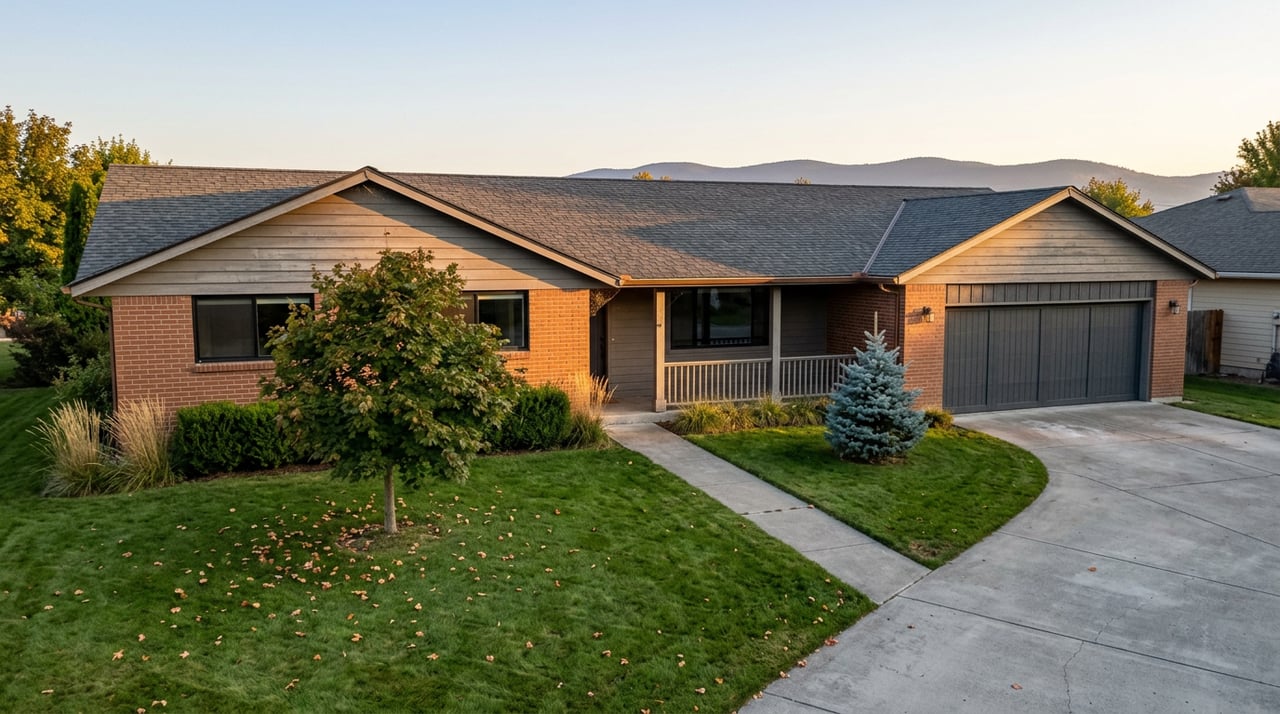
Down toward the valley floor, the character shifts again. White City, Sandy Heights, and the Quail Hollow and Quail Valley neighborhoods make up the established center of the city, where housing stock built mostly from the 1970s through the 1990s draws the bulk of family-stage buyers. This is where the citywide sale-to-list numbers come from. Well-priced homes here move fast and close near full asking price, because this is where the competition is actually concentrated.
Here's how those tiers compare on price and pace right now:
| Tier | Representative areas | How it's behaving in 2026 |
|---|---|---|
| East Bench luxury | Pepperwood, Storm Mountain, Alta View Estates | Smaller buyer pool, longer time on market, prices holding above $1.5M |
| Established center | White City, Sandy Heights, Quail Hollow, Quail Valley | Fast-moving, competitive, closing near full list price |
| Historic Sandy | Historic Sandy | Low sales volume, median price and days-on-market both swinging sharply |
| Cairns corridor | Areas around City Hall and the Shops at South Town | New construction and high-density product, distinct from single-family comps |
The Corridor That Doesn't Behave Like the Rest
That last row deserves its own explanation, because it isn't just another price tier. It's a different kind of real estate entirely.
Sandy has spent more than a decade trying to build a downtown where none existed before. The city calls the roughly 1,000-acre redevelopment zone around City Hall and I-15 "the Cairns," a name borrowed from the rock piles hikers use to mark a trail. When the city broke ground on its first residential tower back in 2014, the plan called for something that looked almost nothing like the rest of Sandy: high-rise condos, structured parking, ground-floor retail, the kind of density Sandy's economic and redevelopment director summed up plainly in a report from Building Salt Lake: "We are a suburban downtown; we are not going to be Salt Lake."
What's changed the corridor most in the last year isn't residential towers. It's professional sports. The Shops at South Town, the mall long known as South Towne Center, has spent the past year turning into a training complex. The Utah Mammoth completed a new practice facility on the site in September 2025. The following month, Smith Entertainment Group announced a companion practice facility for the Utah Jazz within the same footprint. In May 2026, Smith Entertainment Group and Intermountain Health announced a partnership to build a sports medicine center alongside both practice facilities, open to the teams and to the public.
None of that shows up in a single-family comp. If you're pricing a house in White City, the Jazz practice facility three miles away doesn't move your appraisal. But it does explain why buying into the Cairns corridor right now means buying into a fundamentally different thesis than buying a rambler in an established Sandy neighborhood: you're betting on a district anchored by institutional investment and commercial density, not on the kind of housing stock that makes up the rest of the city.
What This Means If You're Comparing Numbers Across Sandy
The practical takeaway isn't complicated, but it does require resisting the urge to treat Sandy as a single line on a chart.
If you're shopping the established center, White City, Sandy Heights, or the Quail corridor, expect real competition. Homes here are closing near full list price and moving fast. Price your offer with that in mind and be ready to act quickly on anything priced well.
If you're shopping the East Bench luxury tier, patience works in your favor. Pepperwood and its neighbors sit on the market longer simply because fewer buyers are shopping at that price point, which means more room to negotiate terms and timeline.
If you're drawn to Historic Sandy specifically, don't let a single month's price swing set your expectations. With only a handful of sales moving the median in either direction, the days-on-market figure will usually tell you more about what to expect than the price trend alone.
And if you're looking at anything inside the Cairns corridor, remember you're evaluating a different product category. New construction near a growing sports and healthcare hub carries its own logic around pricing, appreciation, and resale, separate from the single-family comps that govern the rest of the city.
A Few Questions Worth Asking Directly
Is Sandy's housing market slowing down in 2026? Not uniformly. The established center is still moving quickly and closing near full price. Slower pace is concentrated in the luxury tier, where it's a function of a smaller buyer pool, and in low-volume pockets like Historic Sandy, where small sample sizes make the numbers swing harder in either direction.
Why did Historic Sandy homes take longer to sell even as prices rose? With only 13 homes sold in March 2026, the median price and median days-on-market are both being set by a small number of transactions. That makes both figures more volatile and less predictive than they'd be in a higher-volume neighborhood.
Does the Cairns development affect home values elsewhere in Sandy? Not directly. The Cairns corridor is a different housing product built around high-density residential and commercial investment, including the new Utah Mammoth and Utah Jazz practice facilities and the incoming Intermountain Health sports medicine center. It doesn't set comps for single-family homes in neighborhoods like White City or Quail Hollow, though it does add amenities and investment to the broader city.
Sandy rewards buyers and sellers who know which market they're actually standing in. A citywide median is a useful headline, but it can't tell you whether the house you're bidding on is going to move in nine days or ninety. If you want help reading the specific tier you're shopping or selling into, Nick Booth Real Estate knows these Sandy micro-markets block by block. Let's Connect.